
Definition & Causes
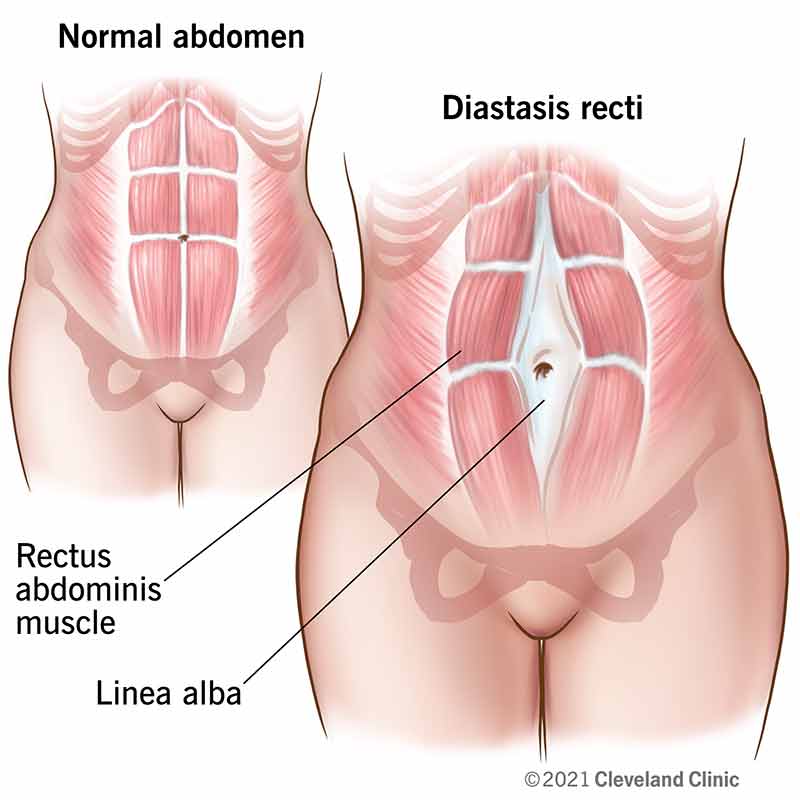
- Separation of the rectus abdominis muscles (the "six-pack" muscles) along the linea alba (midline connective tissue).
- Normal gap: Up to 2 cm (about 1 finger width).
- Diastasis: Gap of 2.5 cm or more, often worsening with straining.
Primary Causes
- Pregnancy (60% of postpartum women develop DR due to uterine stretching and hormonal changes).
- Rapid weight changes (obesity or extreme weight loss).
- Improper heavy lifting (chronic straining weakens connective tissue).
- Genetic predisposition (naturally weak connective tissue).
Symptoms
- Visible bulge or "pooch" (especially when coughing/sitting up).
- Lower back/pelvic pain (due to poor core support).
- Digestive issues (bloating, constipation from weakened abdominal pressure).
- Poor posture (compensating for weak core).
A. Abdominoplasty (Tummy Tuck) with Muscle Repair
- Best for: Postpartum women with excess skin + muscle separation.
- Procedure:
1. Horizontal incision (low on abdomen, hidden under underwear).
2. Skin/fat removed, muscles stitched together (plication).
- Pros:
- Cosmetic improvement (flatter stomach).
- Permanent muscle repair.
B. Laparoscopic (Minimally Invasive) Repair
- Best for: Isolated muscle separation without excess skin.
- Procedure:
1. Small incisions, mesh (if needed) reinforces muscles.
- Pros:
- Faster recovery (2–3 weeks).
- Less scarring.
C. Endoscopic Repair
- Similar to laparoscopic but uses tiny cameras/special tools.
- Minimal scarring, quicker recovery.
Diastasis recti surgery offers life-changing improvements for patients with severe abdominal separation. Below is an expanded look at the functional, cosmetic, and long-term benefits, along with what to realistically expect.
A. Restores Abdominal Strength & Stability
- Eliminates the "pooch" bulge caused by protruding organs.
- Improves posture by reconnecting the left and right rectus muscles.
- Reduces lower back/pelvic pain (common with weak core support).
B. Resolves Related Medical Issues
- Hernia prevention: Closes gaps where intestines could push through.
- Better bladder control: Reduces stress incontinence (leaking when coughing/sneezing).
- Improved digestion: Less bloating/constipation (abdominal pressure normalizes).
C. Enhances Physical Performance
- Easier exercise: Regains ability to do planks, crunches, and heavy lifting safely.
- Reduces "coning" (abdominal doming during movement).
A. Flatter, Firmer Stomach
- Tummy tuck combo: Removes excess skin and fat for a smoother contour.
- Eliminates the "mommy tummy" (postpartum patients see dramatic changes).
B. Clothing Fits Better
- No more "muffin top" or difficulty fitting into pants.
- Swimsuits and fitted shirts look more flattering.
C. Boosts Self-Confidence
- Many patients report improved body image and mental well-being.
- Feeling "like themselves again" after pregnancy or weight loss.